

Jacking Equipment
Jacking equipment is essential in construction, engineering and industrial operations, providing safe and controlled lifting of heavy loads, machinery and structures. From hydraulic systems to mechanical screw and bottle jacks, these tools are vital for tasks such as equipment installation, building elevation, levelling operations and load support.
Hoist & Winch offers a wide range of jacking solutions suitable for general-purpose and specialised applications. Our portfolio includes low-profile jacks for confined spaces and high-capacity units for heavy lifting. Each jack is designed to deliver precision, durability and operator confidence, supported by professional installation, calibration and ongoing service.
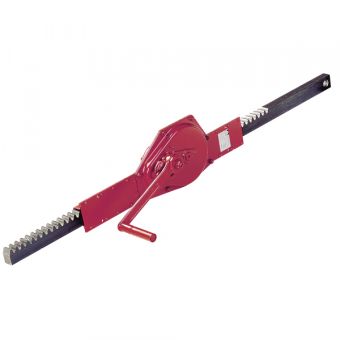
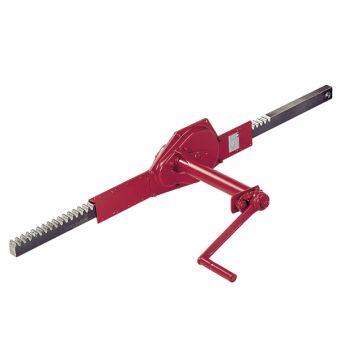
Types of Jacking Equipment
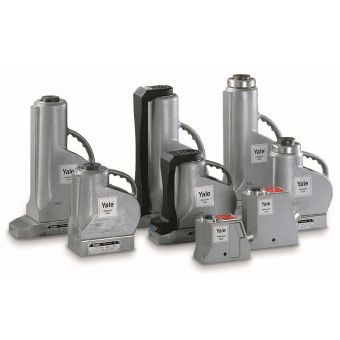
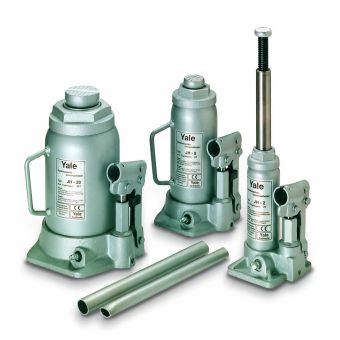
- Hydraulic Bottle Jacks are compact yet powerful hydraulic jacks designed for lifting heavy loads. They are especially useful where vertical clearance is limited. Typical applications include machinery lifting and vehicle maintenance.
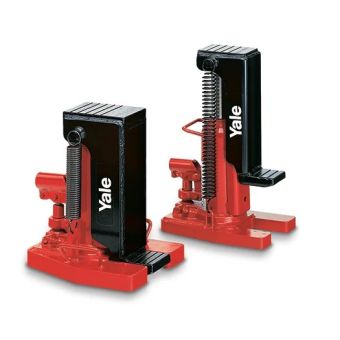
- Low-Profile Hydraulic Jacks are slimline hydraulic solutions built for spaces with minimal headroom. They are commonly used in industrial equipment setups and during renovation projects.
- Mechanical Screw Jacks work by converting rotational force into linear motion. They are reliable, self-locking devices often used for precision positioning, maintenance tasks, and rigging applications.
- Telescopic Jacks are multi-stage hydraulic jacks that provide extended reach and a versatile range of motion. They are well-suited for structural adjustments and modular construction projects.
- Strand Jacks are heavy-duty hydraulic jacks capable of performing synchronised multi-ton lifts. They are typically employed in large-scale operations such as bridge construction and offshore lifting.
Why Jacking Equipment Matters
- Controlled Heavy Lifting: Offers safe elevation of very heavy components with fine load control.
- Precision Positioning: Mechanical screw jacks are ideal for accurate alignment or leveling.
- Space Efficiency: Low-profile designs fit into tight spaces where standard jacks can’t operate.
- Versatility: Suitable for temporary shoring, maintenance tasks, infrastructure projects, and more.
- Built-In Safety: Many jacks lock into position and prevent unintended load drop, ensuring user safety.
Choosing the Right Jacking Equipment
To select the best solution for your needs, ask yourself:
- Load Capacity - Are you dealing with light machinery or heavy industrial loads?
- Available Height Clearance - Does your task require a low-profile or extendable solution?
- Control Level Needed - Do you need slow, precise positioning or quick lifting?
- Environmental Conditions - Is the application indoors, outdoors, or in restrictive access areas?
- Duty Frequency - Will the equipment be used occasionally or under continuous load cycles?
Applications at a Glance
- Lifting machinery for installation or repair
- Raising buildings and structures for foundation work or renovation
- Levelling foundations, platforms, or heavy equipment
- Synchronised lifting of large modules or bridge components
- Maintenance, emergency response, and temporary shoring
Support, Service & Safety
- Delivery & Setup: Quick dispatch for standard jacks; bespoke solutions available with clear lead times.
- Professional Installation: Ensures precise alignment, safe load distribution, and regulatory compliance.
- Maintenance & Calibration: Regular inspection and servicing help maintain load accuracy and safe operation.
- Technical Guidance: Expert advice on chain loading systems, synchronised lifting, and safe jacking procedures.
Harness the power of precision, reliability, and safety with top-notch jacking equipment – tailored to your project needs and supported by seasoned lifting professionals. Let’s elevate your lifting tasks with confidence.
Frequently Asked Questions
What is jacking equipment?
Jacking equipment refers to mechanical or hydraulic devices designed to lift, support, or position heavy loads safely and efficiently.
What are the main types of jacks?
The most common types include hydraulic bottle jacks, floor jacks, screw jacks, low-profile jacks, and strand jacks, each suited to different lifting requirements.
What is the difference between hydraulic and mechanical jacks?
Hydraulic jacks use fluid pressure to generate lifting force, making them powerful and easy to operate, while mechanical jacks rely on screw or gear systems for precise, controlled movement.
What industries use jacking equipment?
Industries such as construction, automotive, rail, oil and gas, mining, offshore, and heavy engineering all rely on jacking solutions.
How do I choose the right jack?
Key considerations include the load weight, available space, required lifting height, frequency of use, and whether precise positioning is needed.
What safety precautions should be taken when using jacking equipment?
Always check load limits, use stable ground, avoid exceeding rated capacity, inspect equipment before use, and never work under unsupported loads.
Can jacking equipment be used in confined spaces?
Yes, low-profile and specialised hydraulic jacks are designed specifically for environments where clearance is limited.
What is a screw jack used for?
Screw jacks are often used for precise positioning, alignment, and leveling tasks in construction, maintenance, and rigging applications.
How much weight can jacking equipment lift?
Capacities range from a few tonnes for compact jacks to hundreds of tonnes for industrial and synchronised hydraulic systems.
How often should jacking equipment be maintained?
Regular inspections before use are essential, with scheduled servicing based on manufacturer recommendations and frequency of use.